- Avalon Care Training Limited
Phlebotomy Training: A Complete Guide to Safe and Effective Blood Collection
Introduction
Phlebotomy is a vital healthcare skill involving the collection of blood samples for laboratory testing, blood donation, transfusion, and research. Accurate blood collection plays a significant role in diagnosing illnesses, monitoring treatment plans, and improving patient outcomes.
A well-trained phlebotomist combines technical expertise with excellent communication and infection prevention practices to ensure patient safety and sample quality.
This guide provides an overview of phlebotomy training, including the knowledge, practical skills, safety procedures, and professional standards expected of competent practitioners.
What is Phlebotomy?
Phlebotomy is the process of drawing blood from a patient’s vein, capillary, or, in specialised situations, an artery for medical purposes.
Common Reasons for Blood Collection
- Diagnostic laboratory testing
- Monitoring chronic illnesses
- Blood transfusion compatibility testing
- Blood donation
- Therapeutic phlebotomy
- Clinical research
The Role of a Phlebotomist
A phlebotomist does much more than collect blood samples. Their responsibilities include:
- Confirming patient identity
- Explaining the procedure
- Obtaining consent where required
- Selecting appropriate equipment
- Performing venepuncture safely
- Labelling specimens correctly
- Maintaining infection prevention standards
- Managing patient anxiety
- Recording procedures accurately
- Transporting specimens safely
Professional behaviour, compassion, and attention to detail are essential qualities for every phlebotomist.
Learning Outcomes
After completing phlebotomy training, learners should be able to:
- Understand human circulatory anatomy
- Identify suitable veins for venepuncture
- Explain infection prevention principles
- Demonstrate safe blood collection techniques
- Use Personal Protective Equipment (PPE)
- Prevent specimen contamination
- Respond appropriately to complications
- Dispose of clinical waste safely
- Communicate effectively with patients
- Maintain accurate documentation
Basic Anatomy and Physiology
Understanding anatomy is essential before performing venepuncture.
Major Veins Used for Venepuncture
Median Cubital Vein (First Choice)
- Large and stable
- Lowest risk of nerve injury
- Preferred vein for most blood collections
Cephalic Vein (Second Choice)
- Easily accessible
- Slightly more mobile
- Suitable when the median cubital vein is unavailable
Basilic Vein (Last Choice)
- Located close to nerves and arteries
- Requires greater caution during blood collection
Infection Prevention and Control
Preventing infection protects both patients and healthcare workers.
Standard Precautions
- Perform hand hygiene before and after every patient
- Wear appropriate PPE
- Handle sharps safely
- Clean equipment properly
- Maintain environmental hygiene
- Dispose of waste correctly
Important: Every patient should be treated as potentially infectious.
Personal Protective Equipment (PPE)
Common PPE used during phlebotomy includes:
- Disposable gloves
- Disposable apron
- Face protection (when splash risk exists)
- Eye protection
- Hand sanitiser
Remember: Gloves must be changed between every patient.
Equipment Required
Typical phlebotomy equipment includes:
- Tourniquet
- Alcohol wipes (where appropriate)
- Vacutainer holder
- Blood collection tubes
- Needles
- Butterfly needle (if required)
- Cotton wool or gauze
- Adhesive dressing
- Sharps container
- Clinical waste bag
- Patient request form
Tip: Always check expiry dates before use.
Patient Identification
Correct patient identification is one of the most important patient safety steps.
Use at least three identifiers:
- Full name
- Date of birth
- NHS or hospital number (where applicable)
Never rely solely on bed location or another person’s verbal confirmation.
Consent
Patients should understand:
- Why blood is being taken
- What will happen
- Possible discomfort
- Any risks involved
Consent may be:
- Verbal
- Implied
- Written (where required)
Patients always have the right to refuse treatment.
Preparing for Venepuncture
Before beginning the procedure:
- Confirm patient identity
- Explain the procedure
- Gather equipment
- Wash hands
- Apply PPE
- Position the patient comfortably
- Assess suitable veins
Ensure there is adequate lighting before starting.
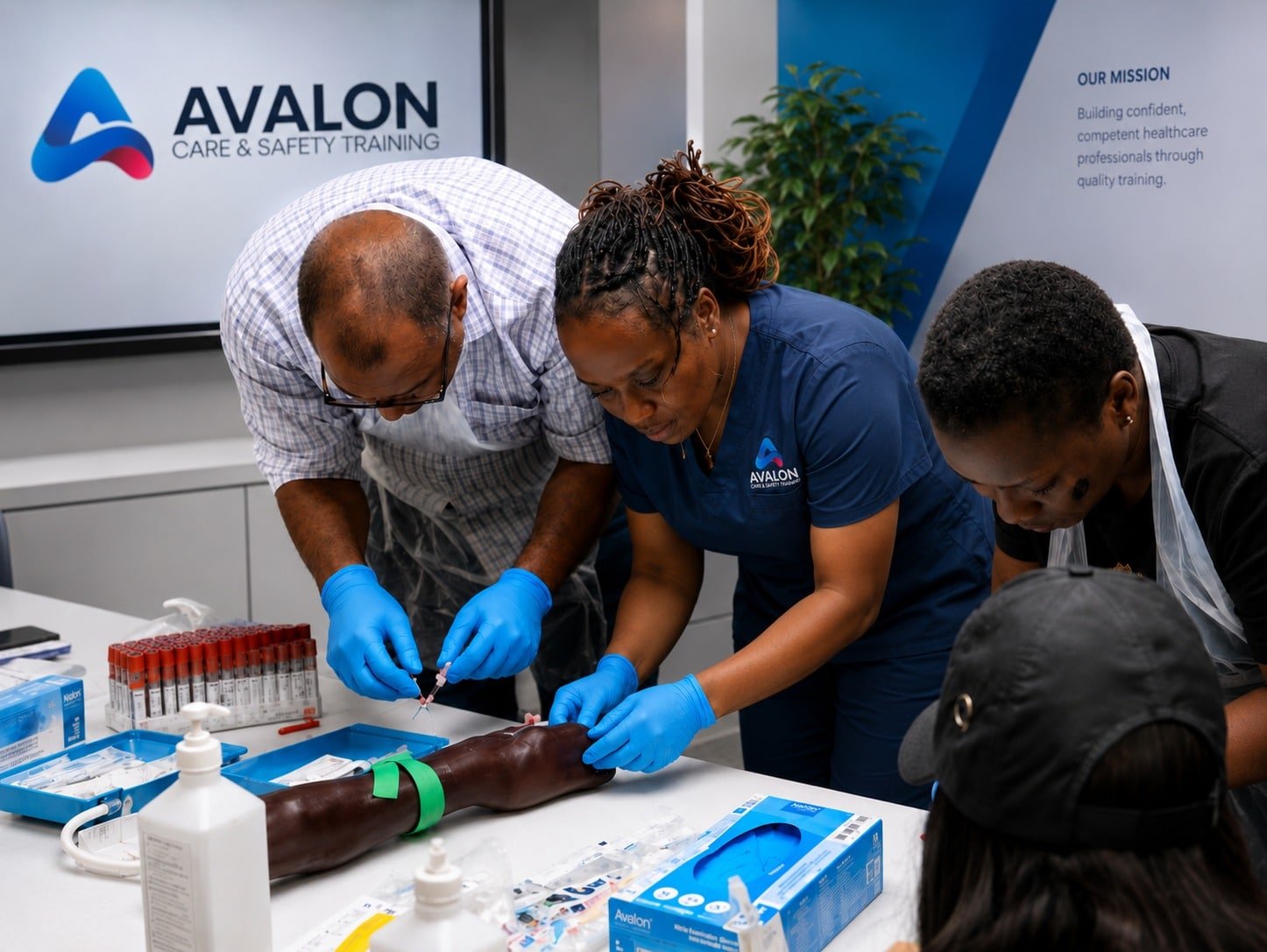
Performing Venepuncture
Typical steps include:
- Apply the tourniquet.
- Select a suitable vein.
- Clean the site if required by local policy.
- Allow the skin to dry.
- Insert the needle at approximately 15–30°.
- Collect blood into the correct tubes.
- Release the tourniquet.
- Remove the needle safely.
- Apply pressure.
- Dispose of the needle immediately into a sharps container.
- Label the specimens.
- Check the patient’s wellbeing.
Order of Draw
Following the correct order helps reduce specimen contamination.
Typical order:
- Blood cultures
- Coagulation tubes (Blue)
- Serum tubes (Gold/Red)
- Heparin tubes (Green)
- EDTA tubes (Purple)
- Fluoride tubes (Grey)
Note: Always follow your local laboratory policy, as colour coding and sequence may vary.
Labelling Samples
Label blood samples immediately after collection.
Include:
- Patient name
- Date of birth
- Unique identifier
- Date
- Time
- Collector identification
Never pre-label blood tubes.
Common Complications
Haematoma
Occurs when blood leaks into surrounding tissue.
Management
- Remove the needle
- Apply firm pressure
- Elevate the arm
Vasovagal Syncope
Some patients may faint during blood collection.
Signs
- Dizziness
- Sweating
- Pale skin
- Nausea
Management
- Stop the procedure
- Lay the patient flat
- Elevate the legs (if appropriate)
- Monitor recovery
- Seek assistance if required
Failed Venepuncture
Possible causes include:
- Small veins
- Rolling veins
- Dehydration
- Poor positioning
Do not exceed the maximum number of attempts allowed by your organisation’s policy.
Sharps Safety
Needlestick injuries can transmit infections.
Always:
- Never recap needles
- Dispose of needles immediately
- Use approved sharps containers
- Report injuries immediately
- Follow post-exposure procedures
Specimen Quality
Poor-quality samples may result in inaccurate laboratory results.
Avoid:
- Haemolysis
- Under-filled tubes
- Incorrect order of draw
- Incorrect labelling
- Delayed transport
Quality specimens improve patient care.
Communication Skills
Many patients experience anxiety during blood collection.
Good communication involves:
- Introducing yourself
- Explaining each step
- Reassuring nervous patients
- Respecting dignity
- Maintaining confidentiality
- Listening carefully
Professional communication helps build patient trust.
Documentation
Record the following after every procedure:
- Date and time
- Procedure completed
- Number of attempts
- Any complications
- Patient response
- Specimens collected
Accurate documentation supports continuity of care.
Professional Standards
Phlebotomists should consistently demonstrate:
- Professionalism
- Confidentiality
- Accountability
- Respect
- Compassion
- Commitment to continuous learning
Practice should always comply with local policies, national guidelines, and professional codes of conduct.
Practical Assessment
Competency assessments commonly evaluate:
- Hand hygiene
- PPE use
- Patient identification
- Equipment preparation
- Safe venepuncture
- Infection prevention
- Sharps disposal
- Sample labelling
- Communication skills
- Documentation
Competency should be reviewed regularly to maintain safe practice.
Summary
Phlebotomy is a critical clinical skill requiring precision, technical competence, and compassionate patient care.
Successful phlebotomists understand anatomy, follow strict infection prevention procedures, communicate effectively, and consistently apply safe blood collection techniques.
Ongoing practice, supervision, and adherence to organisational policies help ensure high-quality specimens and positive patient experiences.
Knowledge Check
Test your understanding with these questions:
- Which vein is generally the first choice for venepuncture?
- Why is correct patient identification important?
- What is the purpose of releasing the tourniquet before removing the needle?
- Name three items of PPE used during phlebotomy.
- What should you do immediately after removing a used needle?
- What is a haematoma, and how should it be managed?
- Why should blood tubes never be pre-labelled?
- List the first three steps you should take before performing venepuncture.
- What are the signs of a vasovagal episode?
- Why is accurate documentation essential after blood collection?
Final Note
This guide provides a foundation for phlebotomy training and should be supplemented with supervised practical instruction, competency assessment, and local organisational policies before learners perform venepuncture on patients.